As 2026 approaches, I’ve been thinking less about what I want to add and more about what I’m ready to stop carrying.
For years, many women with PCOS/PMOS have been taught that progress comes from trying harder. More discipline. More control. More effort. If symptoms persist, the answer is usually framed as doing more of something or doing it better.

But PCOS/PMOS has a way of challenging that belief.
Many women with PCOS/PMOS are taught to manage their health through restriction, tracking, and constant effort, even though these approaches often increase stress and disconnect them from their bodies.
Over time, I’ve learned this truth the hard way.
PCOS/PMOS does not respond well to force.
It responds to understanding.
And in 2026, I’m choosing to do things differently.
I’m Not Taking Over Restriction With Me Into 2026
Restriction is often framed as discipline.
Cut more.
Limit more.
Be stricter.
At first, it can feel empowering. Cutting carbs feels responsible. Removing dairy feels proactive. Saying no to foods becomes proof that you’re taking your health seriously.
Until it doesn’t.
I see this pattern repeatedly in women with PCOS/PMOS. Eating slowly becomes a constant mental calculation. Hunger turns into something to manage instead of trust. Food choices feel loaded with anxiety instead of nourishment.
One woman I worked with told me she felt proud on days she barely thought about food. Then she realized the only reason she wasn’t thinking about it was because she was constantly overriding hunger cues and ignoring what her body was asking for.
That isn’t freedom.
That’s control disguised as care.
Some medical conditions truly require specific dietary changes. Women with celiac disease must eat gluten free. That is medically necessary and non negotiable.
PCOS/PMOS is different.
Eating for PCOS/PMOS should be rooted in science, individual context, and ongoing feedback from the body, not fear.
In 2026, I’m leaving behind the belief that health has to feel restrictive to be effective.
I’m Not Taking Punishment Style Exercise With Me
Movement is another place where trying harder quietly takes over.
Burn more calories.
Push through fatigue.
Never miss a workout.
For many women with PCOS/PMOS, exercise becomes something to endure rather than something that supports them.
I’ve worked with women who forced high intensity workouts while exhausted. Who trained harder when recovery was already poor. Who felt guilty choosing rest because their tracker didn’t validate it.
One client shared that she stopped enjoying movement she once loved because it had turned into something she constantly felt behind on.
That’s not health.
That’s pressure.
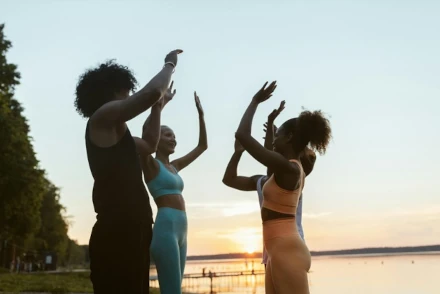
Movement can be incredibly supportive for PCOS/PMOS when it works with the body. Supportive movement should leave you feeling more regulated, not depleted. Stronger, not fragile. Capable, not behind.
In 2026, I’m choosing movement that supports resilience, not punishment.
I’m Not Taking Obsession With Numbers Into 2026
This may be a hot take, but it matters.
Data can be helpful.
It can also quietly disconnect us from our bodies.
Calories burned.
Steps taken.
Macros met.
Sleep scores tracked.
None of these tools are inherently bad.
The problem starts when numbers become authority.
I’ve seen women override hunger because an app told them they ate enough. Push through fatigue because a tracker didn’t justify rest. Feel guilt for missing a step goal even when their body clearly needed recovery.
At some point, helpful information stops being guidance and starts becoming judgment.
When numbers become louder than the body’s signals, trust erodes. And when trust erodes, stress increases.
Stress is not neutral in PCOS/PMOS.
In 2026, I’m choosing information as a guide, not a judge.
Awareness without obsession.
Data without shame.
Support without pressure.
When health requires constant self surveillance, it stops being supportive.
I’m Not Taking Weight As the Only Measure of Progress
Weight has long been treated as the final proof that something is working.
If weight goes down, success.
If it doesn’t, frustration.
PCOS/PMOS complicates that narrative.
Many women with PCOS/PMOS experience insulin resistance, which makes weight loss slower and less predictable. That difficulty is not a lack of willpower. It is biology.
I’ve seen women improve energy, sleep, inflammation, and cycle patterns long before the scale ever moves.
When weight is the only measure, those wins get overlooked. And approaches that are actually helping often get abandoned too soon.
Weight loss itself is not bad. For some women, reaching a healthier weight improves symptoms and quality of life.
The problem is when weight becomes the goal instead of one possible outcome. In 2026, I’m leaving behind success defined by a single number.
Progress often whispers before it shows up loudly.
Professionally, I’m Not Taking Silence With Me
There was a time when staying quiet felt easier.
Not questioning outdated narratives.
Not naming gaps in care.
Not talking about what women were experiencing between appointments. But PCOS/PMOS has shown me the cost of silence.
When women don’t understand their bodies, they blame themselves.
When they don’t feel heard, they stop asking questions.
When care feels fragmented, confusion grows.
In 2026, I’m choosing clarity over comfort.
That means talking openly about inflammation, oral systemic health, stress resilience, and the reality that many women are navigating PCOS/PMOS without adequate support.
I’m Not Taking Doing This Alone Into the New Year
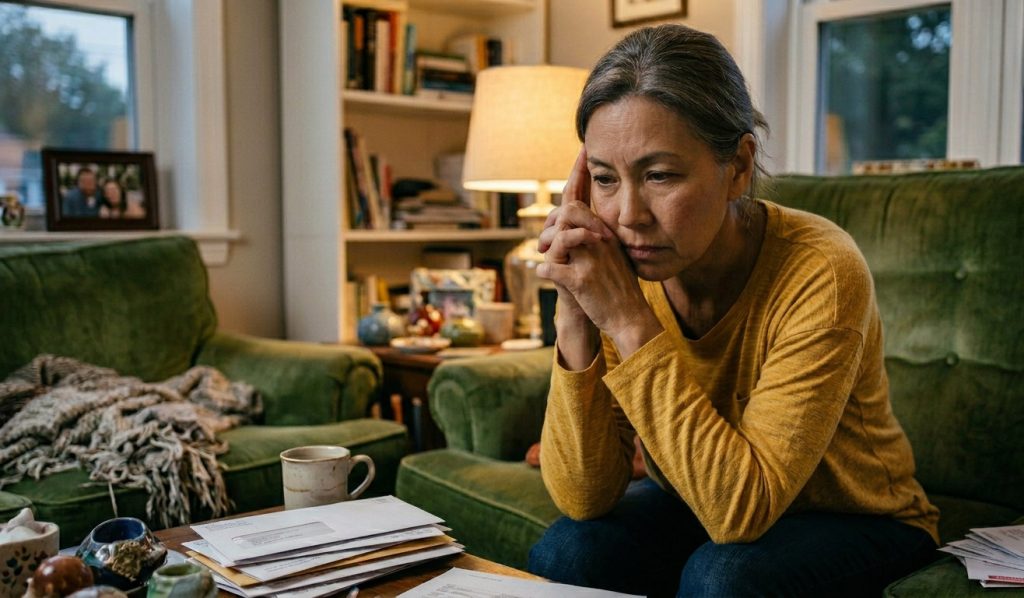
PCOS/PMOS can be deeply isolating.
Many women are diagnosed and then left to figure everything else out on their own. They collect information, try strategies in isolation, and wonder why nothing sticks.
That experience shapes how I work.
In 2026, I’m leaving behind the idea that support should be optional or earned. Complex conditions require context, guidance, and partnership.
What I Am Choosing Instead
I’m choosing curiosity instead of judgment.
Education instead of blame.
Awareness instead of fear.
I’m choosing to trust that the body is not broken. It is communicating.
And I’m choosing to help women move forward without pressure, perfection, or punishment.
This is the work I do now. Supporting women with PCOS/PMOS as they reconnect with their bodies, understand what their symptoms are telling them, and build sustainable paths forward.
A Question Worth Sitting With
As you look toward 2026, consider this:
Where has trying harder actually pulled you further away from your body? Because sometimes the most meaningful progress doesn’t come from more effort. It comes from choosing a different approach.
Coming next: My 2026 Era. What I’m choosing to focus on, how I’m showing up differently, and why none of us need to do this alone.
Be sure to subscribe to our newsletter at the bottom of this page, and subscribe to our YouTube channel for more helpful resources.
Related Posts